
Results, Part 2
What I learned About El Salvador During the Bukele Era

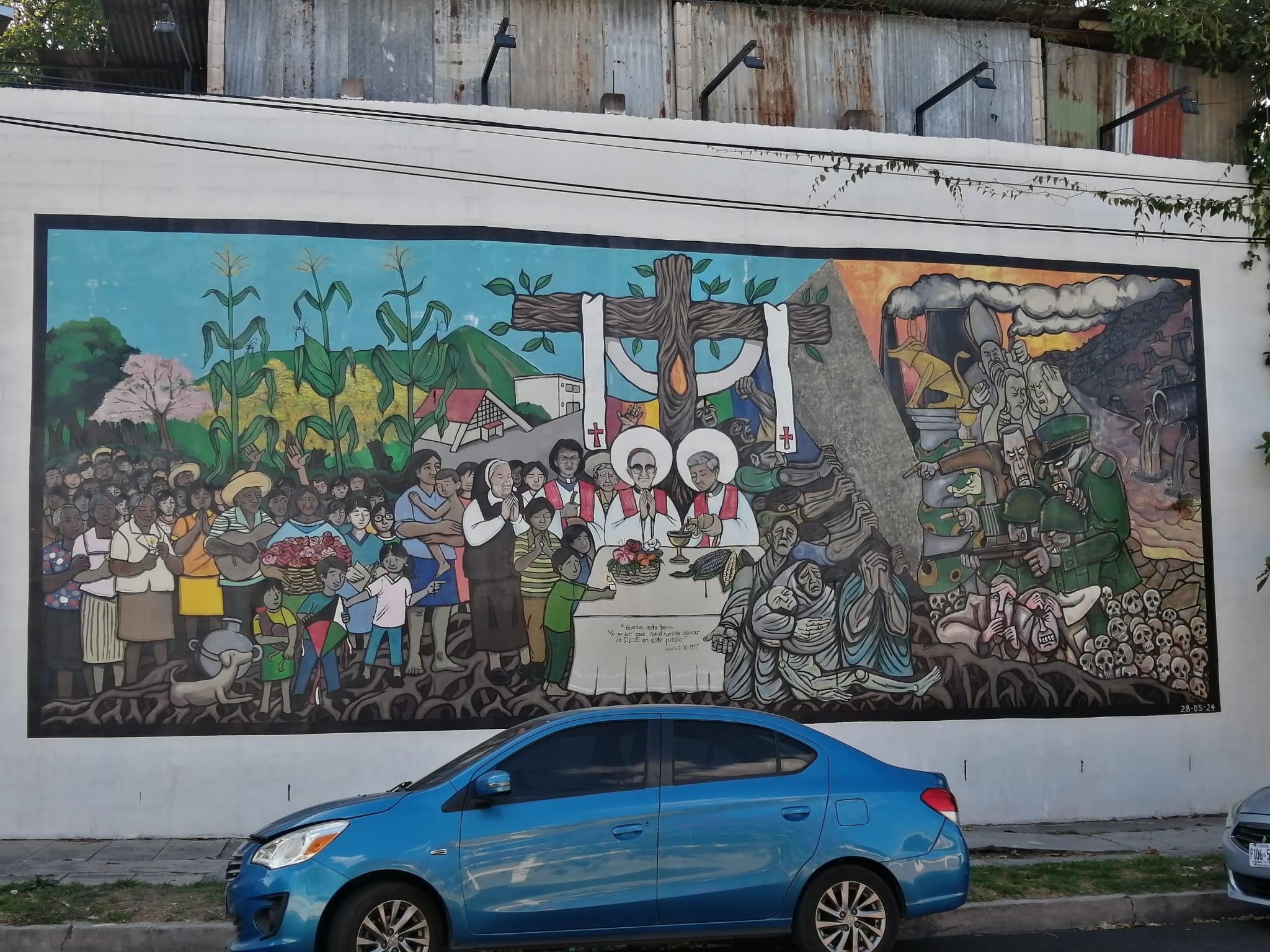
To read Part 1 of this piece, click here.
Despite the positive outlook I developed throughout my time in El Salvador, in the last few days of my trip, reality – as it often does – refused to bite its tongue and started speaking to me sternly. While I was in Chalchuapa, a town about an hour and a half outside of San Salvador, I was standing at a bus stop waiting for the bus I could take back to the capital. While there, I witnessed a funeral procession moving slowly toward a nearby cemetery. There was a short woman, dressed entirely in black, leading it. Despite her enormous sunglasses, the distance between me and her, and the sun scorching her face, I was still able to see the moisture of her tears soaking her cheeks. The weeping woman held a framed photograph of a young man who I assumed was her son, and whose age in the picture made it clear that the odds of him dying of natural causes was painfully low. The closer she got to the cemetery’s rusted open gates, the slower she moved, with every step seeming more difficult than the last. She appeared completely isolated from everyone and everything around her, utterly alone in her grief. Her fortitude during that terribly long walk, which barely covered a hundred metres until she reached what was to be her child’s final resting place, devastated me.
Meanwhile, trailing the grieving mother was a black pickup truck with a coffin in the cargo bed. The spotless windows surrounding the coffin revealed a collection of flowers draping its lacquered, almond coloured surface. A group of people, all of whom dressed in black, many of whom openly weeping, walked behind the truck. There was no music. No celebration of the boy’s life. Only sadness for his death. Not a word was spoken from the cortege. However, I was able to make out one word from one of the few onlookers standing near me at the bus shelter: Homi.
Not long after the final member of the procession passed through the cemetery gates, the bus I was waiting for came. Like many of the public buses that will take you basically anywhere in the country, this bus was elaborately decorated with cartoon characters, a striking colour scheme, and a number of lights on the front and back that I knew once the sun set would shine bright enough for everybody within an unreasonable distance to see.
The ride back to San Salvador mostly went along the Panamerican Highway, and for the first twenty minutes it was smooth, but once we reached a stretch between Lourdes and Colón, the traffic slowed to a near halt. The temperature that day rose to thirty-seven degrees, and on a packed bus with no air conditioning it felt even hotter. I could see the sweat caking on all of the passengers’ bodies (my own included), and I could smell the pungent mixture of that sweat mixed with the thick exhaust fumes funnelling in through every opened window. But nobody complained, making it clear the gridlock was a common occurrence. Some people even managed to fall asleep. Aguante.
What led to the bus moving less than five kilometres in an hour and a half? It wasn’t a multi-car pile up, or any other act of negligence, but construction on a new viaduct in order to improve that small section of the famed transcontinental highway. The construction wasn’t idle either. I had plenty of time to watch workers perform their tasks vigorously, despite the blazing heat. I also had time to watch an ambulance, its lights and sirens shining and blaring in vain, forced to a standstill just like every other vehicle. Watching that ambulance made me wonder about the cost of progress. I suppose the answer depends on whether or not you are in – or waiting on – the ambulance.
After coming back from that gruelling ride that covered less than seventy-five kilometers, but took nearly four hours, I had more conversations with people I met. I brought up all of the new construction I had seen on the Panamerican, throughout San Salvador, and the country as a whole. Many of the people I spoke to replied with a great deal of enthusiasm, talking about the advantages they hoped it would bring, the benefits. However, there were others I spoke to that didn’t share that enthusiasm. Instead, they told me about the vulnerable people who saw none of those benefits and had to endure new problems that went just as ignored as the ones that existed before any of the construction even took place.
While the invigorated safety and security along with the progress in infrastructure is undisputably critical for the country’s continued development, there is still a long way to go. I didn’t have to look very hard while walking on severely cracked and sloping sidewalks to see the same poverty that I’ve witnessed in many other places I’ve been to around the word. Whether in the centre of San Salvador, or its outskirts, I saw plenty of homeless people, some sleeping on the street, others dumpster diving for rotten food or anything else that held value to them. Right in front of signs saying no vendors, I saw elderly, blind, or physically disabled people selling whatever trinkets and basic hygiene products they could – from toothbrushes to nail clippers – while mothers sold sliced mango on makeshift stands as their children slept against their knees.
There were plenty of abandoned buildings with smashed shards for windows. Public healthcare centres had long lines of desperate looking people, many of whom seemed like they had been there for hours, if not days, while the buildings themselves looked every bit as worn out as they did. This was a stark contrast from the upscale appearance of the private health care centres, both for the buildings themselves and the patients casually entering and exiting them.
Many corners in the city were filled with piled up garbage that brazenly ignored signs saying those spots were not for dumping. And in the intersections near such corners, it was not unusual to see kids and teenagers performing tricks for coins during red lights, some of which involved juggling machetes.
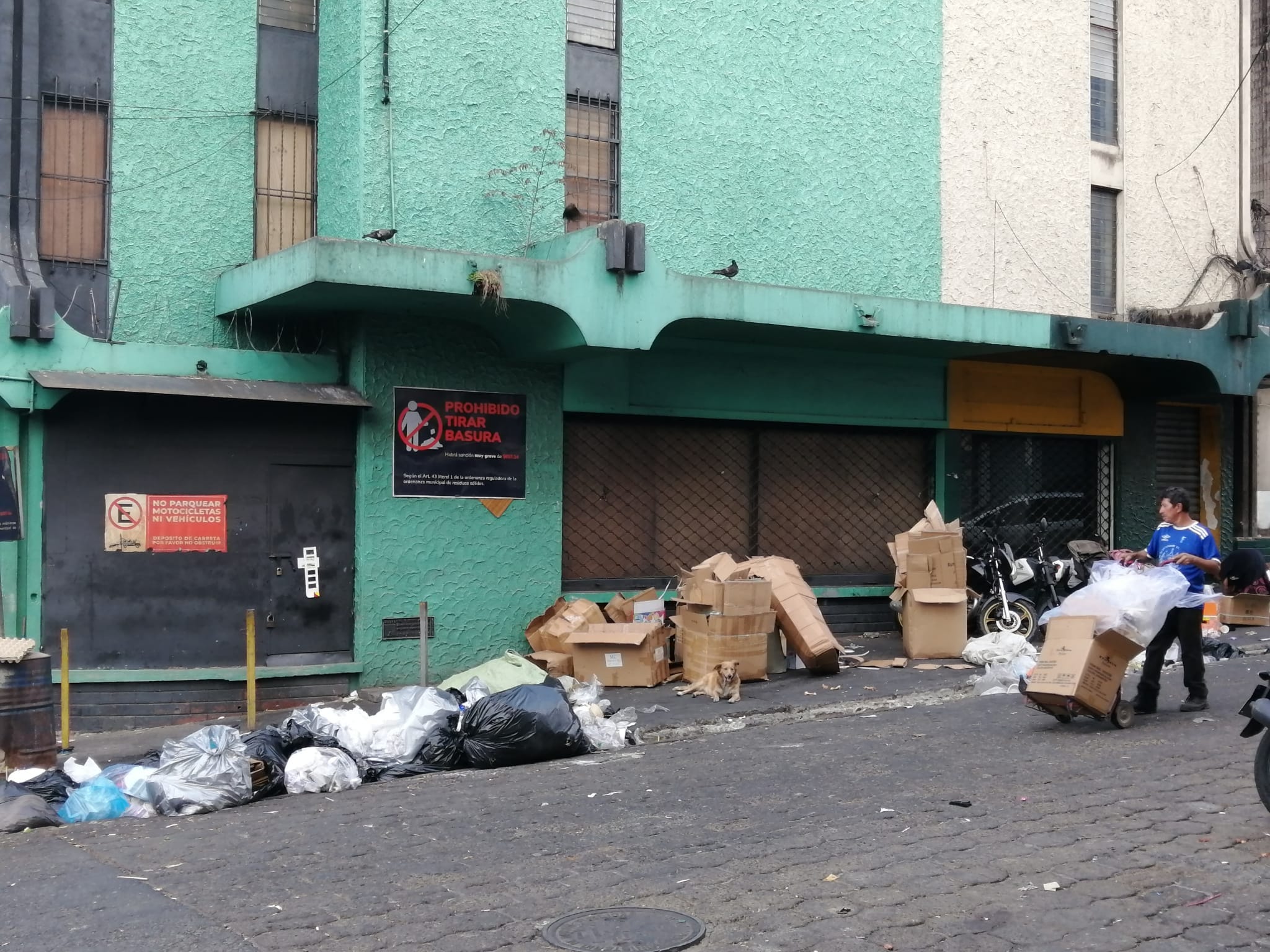
These things destroyed any illusions I may have had that I was exploring a utopia. And while they are not an indictment on El Salvador specifically, because the same things can be seen in every city throughout Latin America, and many cities throughout the world, what they demonstrate is how hard life is for the vast majority of people in El Salvador, minus the wealthy. Most people in this part of the world work harder, longer, and for far less money than Canadians, while enduring gruelling commutes that make incredibly long days even longer. They endure these challenges, day after day, while usually only having Sundays off to do everything necessary for the household, while still finding time for family and God. Aguante.
In a small restaurant between Llopango and San Salvador, I spoke to a waiter named Ricardo. Since I was there with a friend of his, Ricardo spoke more openly than I’m sure he would have if I was alone. Prompted by our mutual friend’s urging, Ricardo detailed his wages, and how they were far too low to make ends meet, despite working well over forty hours a week. He said he earned approximately $182.50 USD every two weeks ($365.00 per month after taxes), which worked out to just a few cents more than $2.00 per hour. I then asked him how much rent cost, and he told me for the simplest place within the city limits, it was between $250-$300.00 per month, leaving him with less than $100.00 to cover his bills, transportation, clothing, entertainment, and food per month, or less than $25.00 per week. He, like many other minimum wage earners in El Salvador, don’t make enough money to live. Is that price worth the newfound safety and security they’ve been given, or the progress they are seeing? When I asked Ricardo that question, he thought for a long time before changing the subject.
On my last night in El Salvador, I went back to the Centro Histórico. It was full of people, from families, vendors, and tourists to soldiers, cops, and young people taking pictures of themselves and their friends. Curious to explore a building I didn’t enter throughout my entire time in the capital, I approached the national library, which started construction in 2022 with substantial financial help from the Chinese government, and opened in November 2023. To my surprise, despite the late hour, the library was still open.
The first few floors of the library were filled with books for kids and adults, but as I made my way further up, I was blown away by the quality of resources offered to everybody inside, completely free of charge. One floor had Star Wars, Game of Thrones, Lego, and Lord of the Rings themed areas that would give Comi-Con a run for its money. Meanwhile, on the top floor, along with an incredible balcony view of the entire Centro Histórico, had a collection of enormous TVs hooked up to the best video game systems on the market, along with flight simulators, a robotics area, and a VR room. By the end of my visit, I was convinced the library was one of the most impressive I’ve ever seen.
Many people throughout the world view the Chinese government as a human rights violating affront to democracy. Bukele himself seemingly shared this view, when in March 2019, before taking office, he went to Washington DC and said the following: “China does not play by the rules; they do not respect the rules. They are not a democracy, but they intervene in your democracy.” Six months later, as president, he happily accepted the Chinese government’s non-reimbursable aid package that amounted to more than $500 million dollars, which was used to build the impressive new national library, and is also funding the building of a new national stadium that is supposed to be the largest in Central America. Seven years after taking China’s money, in March 2026, Bukele attended an anti-China conference at the invitation of Trump.[1]
On one hand, it would be easy to write off Bukele as a hypocrite who said what he thought Trump (during his first presidential term) wanted to hear in order to solidify him as an ally just before winning his first election, and then changing his tune after assuming office in order to secure half a billion dollars from China to build an opulent national library and stadium, before changing his tune to once again to placate Trump during his second term as president of the United States. I think that perspective however, while not incorrect in my opinion, misses an important point that can’t be ignored. Regardless of which world superpower Bukele sucked up to, it enabled him to get the money necessary to build a new national library and stadium for his country.
After visiting the library, I walked over to the Catedral Metropolitana de San Salvador, where the remains of assassinated archbishop Óscar Arnulfo Romero y Galdámez is kept. In front of the building, on the same ground where a quarter of a million Salvadorans mourned the death of Romero more than four decades earlier, and dozens of them were killed by the military in response, I saw a small group of people holding home made signs and protesting. This group of less than a dozen people fervently chanted, took pictures, and tried talking to other people in the city’s main square. However, despite their best efforts, most of the people in the square paid them no mind.
Curious about the nature of this small group of activists’ determination to be heard, I approached them and engaged in what turned out to be a long and illuminating conversation.
The first person I spoke to was Eneida Abarca. She is the mother of Carlos Ernesto Santos Abarca, who disappeared four years earlier at the age of twenty-two. Initially, Eneida was surprised that I was able to freely converse in Spanish, something she said she hadn’t encountered with many tourists, but after that shock went away, she told me her story. It reminded me of many similar stories I’ve heard from mothers from Mexico to Argentina who were desperate to find their disappeared children, or to receive closure in finding out where their remains were, or to at least find out what happened to them if no such remains were left to be found. She told me how for the last four years she contacted every branch of government along with every department of law enforcement in an effort to find out what happened to her son and was stonewalled at every turn. She said the government didn’t care about her son, like it didn’t care about any other disappeared sons or daughters. I could see the anguish on her face and could hear it in her voice. I knew what she wanted, and I also knew that she was not likely to get it, but that didn’t stop her, just like it didn’t stop fiercely loving mothers in Ciudad Juárez and Estado de Mexico or the Las Madres de Plaza de Mayo, whom I had the immense pleasure to briefly meet years earlier in Buenos Aires.
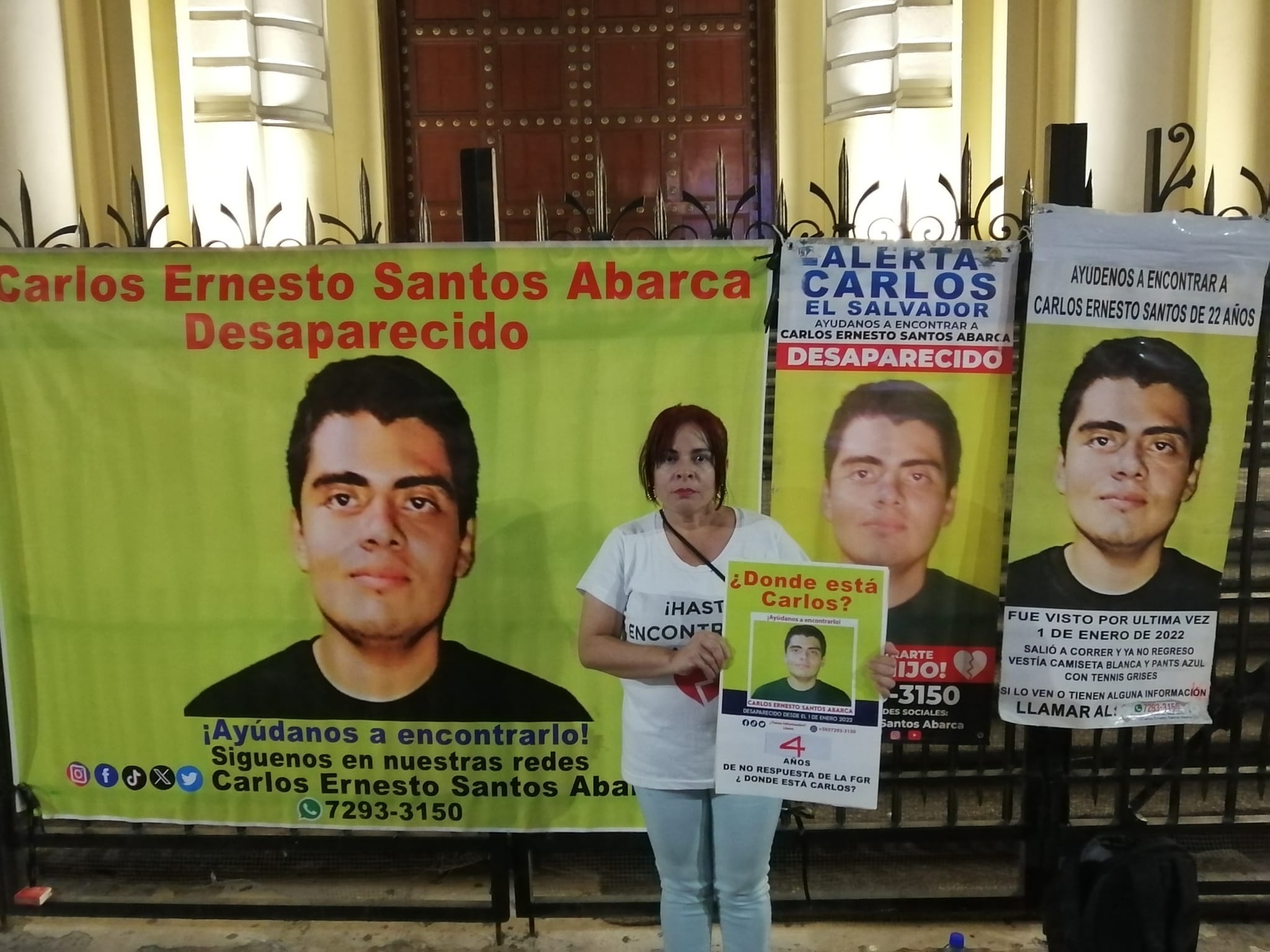
During my conversation with Eneida, the rest of the group joined us. I asked them about the changes in the country since Bukele took office, and while they did acknowledge the newfound safety and security and the progress his administration has enabled in some facets, they also told me how that progress has involved the silencing of critics, and the corrupt theft of public money by members of Bukele’s inner circle, including family members.
They told me about the intentional burning down of several local markets and apartment buildings in order to build newer commercial buildings. The majority of those burned down buildings were in poor areas of the city, close to the centre where I was standing, but far enough where most tourists will never lay eyes. I was told the tenants who lost their homes received no compensation and were left to fend for themselves.
Members of the group also told me about the issues that new mining in the country is causing. This was the first time I was hearing about that, so I decided to do my own research.
Validating the group’s concerns, according to an article from the Associated press, a ban on metal mining that was established in 2017 was reversed following a 57-3 vote from El Salvador’s congress in December 2024, after Bukele proposed a law that would allow mining everywhere except for nature reserves and sensitive watersheds.
Environmentalists, along with the Roman Catholic church, have openly opposed the reversal of the ban, with Archbishop José Luis Escobar Alas saying, “It will damage the country forever.”
A poll released by Central American University José Simeón Cañas also suggested that a majority of Salvadorans don’t believe that mining is appropriate for their country. Justifying the ban reversal, Bukele (who called the ban absurd earlier in 2024) said on X a month prior to the reversal that the country’s unmined gold could be “wealth that could transform El Salvador”. He has estimated that the country’s gold reserves are worth $3 trillion, and while exploration has revealed deposits of gold and silver, because there had been no large-scale metal mining by that point it was unclear how large the country’s gold reserves could be.[2]
Before I left the square, I told the group that I wanted to write about what they told me. They all said yes. I then asked if they wanted me to use their real names, fake names, or no names at all. They didn’t just give me permission, but insisted I include their full names, which, in addition to Eneida Abarca, are as follows: Fernando Chavarria, Gloria Anaya (from Colectivo Herbert Anaya), Virna Ivette Abarca, Coco Rivas, and Alejandro Ramirez, who was a survivor of the El Volcán de San Salvador massacre that was committed by the Salvadoran armed forces in 1982 against the Ramirez family and resulted in 9 members being murdered or disappeared.
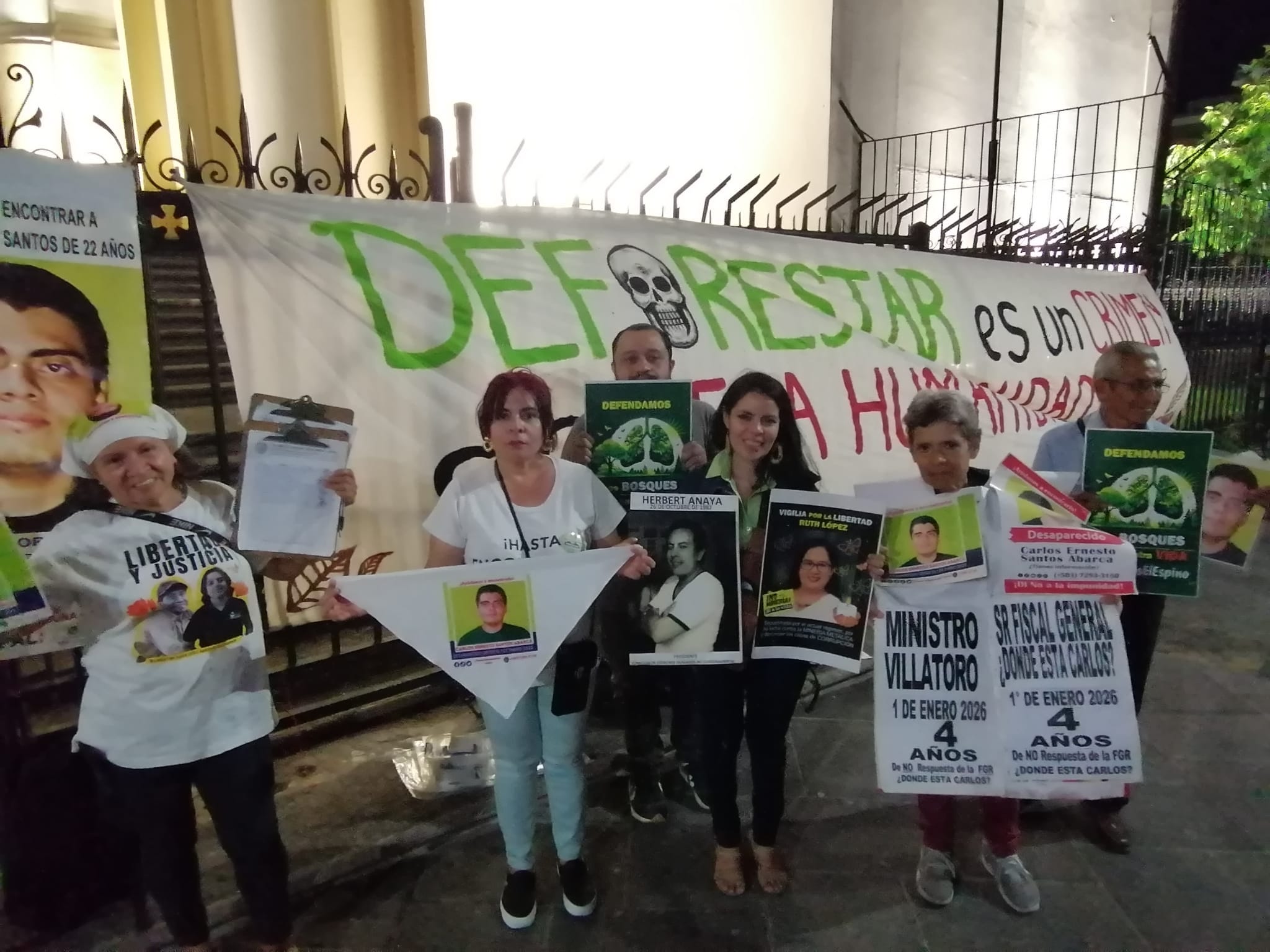
I chose not to directly ask the group if the progress that has excited so many people in El Salvador was worth the issues they were protesting against. However, it was clear to me from how small the group was, and how little attention they were being paid, that the collective shouts of joy for that progress was muzzling the voices of those whose misery adjoined it.
It wasn’t difficult to find statements from other activists in the country who shared that group’s collective concerns about Bukele and his government.
In a BBC article, a Salvadoran lawyer, Enrique Anaya, while speaking in an interview on a local television program on June 3, 2025, was quoted as saying, “Here, anyone who speaks out, anyone who criticizes, anyone who doesn’t kneel before the idol, goes to jail.”
Four days after that interview, Anaya, who holds a doctorate in Constitutional Law, was arrested and accused of money laundering. Meanwhile, another lawyer who criticized Bukele, Ruth Eleonora López, was removed from her home by police and had since been prosecuted for alleged illicit enrichment.
The article also stated that 40 journalists and more than a dozen human rights defenders have fled the country for fear of imprisonment.[3]
Even entire news organizations haven’t been spared the wrath of Bukele and his government after criticizing both him and it. El Faro, a Salvadoran investigative news outlet that has worked to expose corruption in the Bukele government, announced on May 7, 2026, that two of its members’ assets, including a bank account and property, were frozen. In response, El Faro’s director, Carlos Dada, said in a news conference, “It’s another level of attack against us with a clear purpose. These are not fiscal measures. They are political measures trying to silence us.” El Faro has been subject to ongoing audits by Salvadoran authorities since 2020, shortly after Bukele took office for the first time, with the government alleging that the news outlet has evaded $200,000 in taxes, which Dada denies. The consistent government aggression caused El Faro to move its headquarters to Costa Rica in 2023, while all of its members live in exile outside of El Salvador.[4]
According to the results of a survey in May 2025 that was conducted by Ludop, one of the most reliable polling firms in El Salvador, the approval rating for Bukele and his government was 80%, while 70.6% of respondents said they agreed or strongly agreed with him serving a third term. However, the survey also revealed that 57.9% of respondents considered it likely or very likely that a person or institution will suffer negative consequences for criticizing Bukele, and of that total, 48.3% believed that the most likely consequence was being arrested or imprisoned.
The survey also included the following statement: “In some circumstances an authoritarian government can be better than a democratic one.”
52.2% of respondents said that they agreed or strongly agreed.[5]
* * *
During a speech on June 1, 2025, Bukele spoke about the criticism he has received. Below is an English translated excerpt from that speech.
“Some say that there used to be democracy in El Salvador and now there isn’t. You’ve read that, right? But the truth is that before you could choose between bad and worse. Anyone who says otherwise is just making a living from it. The only ones who say that are either people who don’t know the situation or those who lived off it.”[6]
I believe many people who argue over whether or not a country is a democracy are doing so on a theoretical basis, and like most theoretically based arguments, they often go nowhere.
Based on the tremendous challenges El Salvador has had to endure – including a brutal twelve-year civil war that ended only forty-four years ago following the Chapultepec Peace Accords, and a war against equally brutal gang violence that ended just a few years ago – and the subsequent generational trauma inflicted upon the population, the smallest country in Central America does not have the luxury to fixate on the theoretical. El Salvador required practical solutions and tangible results for its own survival.
This doesn’t mean that criticisms about a government implementing practical solutions for the sake of tangible results are not relevant and should be ignored, however. The disappearances of young men and women without explanation or assistance from the government is a problem. Attacks from the government against journalists and news outlets willing to question the questionable acts of that government is a problem. The burning down of apartment buildings and markets in poor areas for the sake of “progress” is a problem. Making swift, and monumental, changes to a constitution just to benefit the political party currently in power is a problem. Actions made solely for profit at the expense of the environment is a problem. And the violation of human rights against prisoners, both domestic and foreign, both guilty and innocent, is a problem. But do any of these problems make the country they occur in no longer a democracy? I believe the answer is no. Instead, they are problems that need to be examined and solved within a democratic country, which El Salvador is.
Tangible results should always supersede intangible theory, while the dogma of democracy should never be deemed more important than people’s actual lives. I genuinely believe that, but does that justify breaking rules that are supposed to be an integral part of democratic values? Only the people who live within a country where such rules are being broken can answer that, and they do so democratically by choosing to re-elect or not re-elect the governing body who is accused of breaking those rules. That choice is theirs and theirs alone, and whether or not they make the right choice is their responsibility, just as the results of that choice – whether positive or negative – are also their responsibility. I believe a key component of democracy is not just the ability of a population to choose who leads it, but the accountability of that population who must live with the actions of that leadership once chosen.
While I stand by the point made above, I’m nonetheless uncomfortable with it. That aforementioned accountability can be complicated. Should a population be held accountable for the actions of a government that they elected, but for the sake of consolidating its power started disregarding the will of the people who elected them, while leaving them powerless to remove them? Moreover, while the majority may approve of the actions of a government they democratically chose (as is the case in El Salvador), that does not mitigate the suffering felt by the minority affected by those actions from that same government. Even if just a small community of people are repressed by an overwhelmingly popular and democratically chosen government, that repression is every bit as real as the positive results created by that same government. No minority community should have to endure that, while the government repressing them gets to absolve itself because of how much its actions are benefiting the majority. However, is that trade off not a representation of “majority rules”, which is arguably the basis of democracy itself?
During my trip, I spoke to a friend of mine who is originally from Bogotá, Colombia, but has been living in Medellin for the last few years. We discussed what I had seen, learned, and thought about the current conditions in El Salvador, and the question I had about whether or not the safety Bukele brought to his country was worth the price several Salvadorans have had to pay for it. He immediately brought up the question of having to choose between liberty and safety, something he has experienced firsthand in Colombia.
He said that it was sad that such a choice was so often presented to people throughout Latin America. He also acknowledged that in many cases that choice must be made because in some cases there is the far worse option of a population receiving neither liberty nor safety, making getting at least one of them all the more appealing. Additional perspective must be paid to this reality however, since a person can feel perfectly safe in a state that sacrificed liberty for that safety just as long as that person doesn’t oppose the leadership providing them with it. Safety and liberty for all should be a right, but that is simply not the case for millions of people around the world, and to believe otherwise is to live in delusion because those people usually have no choice but to make a choice they shouldn’t have to make.
As I left El Salvador, I reflected on a question I asked myself when I first arrived, and the subsequent questions that arose from its answer.
Were the positive changes I heard about prior to my arrival – especially those regarding safety and security – real? Yes, they absolutely were, a fact verified by my own eyes, in addition to many Salvadorans I spoke to. But did those changes come at a price paid for by a minority of people whose voices are difficult to hear amidst the cheering of the majority? Yes.
Is that price worth it? This is the question I cannot, and will not, answer, because it isn’t for me to answer. And while it is difficult for me to argue against such clear and obvious results, it is equally difficult for me to just ignore those who have suffered in order for them to occur. This leaves me wondering if it is inevitable that to satisfy the majority, the minority, in some way or another, will always suffer. And that to believe otherwise is to strive for the impossible, the utopic, which can never exist for as long as human nature is involved. I would argue that while that may be true, I believe the failure is not in the inability to achieve the impossible utopia, but to stop striving for it, despite knowing it will never be fully realized.
For El Salvador, I can only discuss what I’ve learned about the past and seen in the present. For the future, however, particularly as it pertains to Bukele’s government ruling the country well into the 2030s (a possibility that is very real with the recent elimination of presidential term limits in the constitution), that rests entirely with him, his government, and the people of El Salvador. For as impressive and beneficial the results his government has created up to this point have been, results can change in time, as can the favour attributed to whomever is responsible for them.
There is a troubling track record for many – though not all – leaders, whether democratically elected or not, that the longer they hold onto power, the more obsessed they become with keeping it instead of continuing to do what got them that power in the first place. Will that be the future for Bukele? For El Salvador itself? Or will something entirely different occur in the years to come?
The answer will ultimately end up dictated by the results.
Written in Toronto, in May 2026.
[1] Bryan Avelar, “Bukele, a Trump ally, leans on Chinese support to bolster his political project”, EL PAIS, March 3, 2026, https://english.elpais.com/international/2026-03-03/bukele-a-trump-ally-leans-on-chinese-support-to-bolster-his-political-project.html
[2] “El Salvador’s Congress approves ending ban on metals mining”, Associated Press, December 23, 2024, https://apnews.com/article/el-salvador-law-bukele-gold-mining-16864deac495dd5a3f2cf4dfd17e06a7
[3] Leire Sales, “’Bukele feels empowered by his alliance with Trump’: how pressure has increased on voices critical of the government in El Salvador”, BBC, June 26, 2025, https://www.bbc.com/mundo/articles/czxengql08ko
[4] Anna-Catherine Brigida, Associated Press, “Salvadoran news outlet El Faro says its assets frozen in retaliation for reporting on Bukele”, abc NEWS, May 7, 2026, https://abcnews.com/International/wireStory/salvadoran-news-outlet-el-faro-assets-frozen-retaliation-132759323
[5] Leire Sales, “’Bukele feels empowered by his alliance with Trump’: how pressure has increased on voices critical of the government in El Salvador”, BBC, June 26, 2025, https://www.bbc.com/mundo/articles/czxengql08ko
[6] Ibid